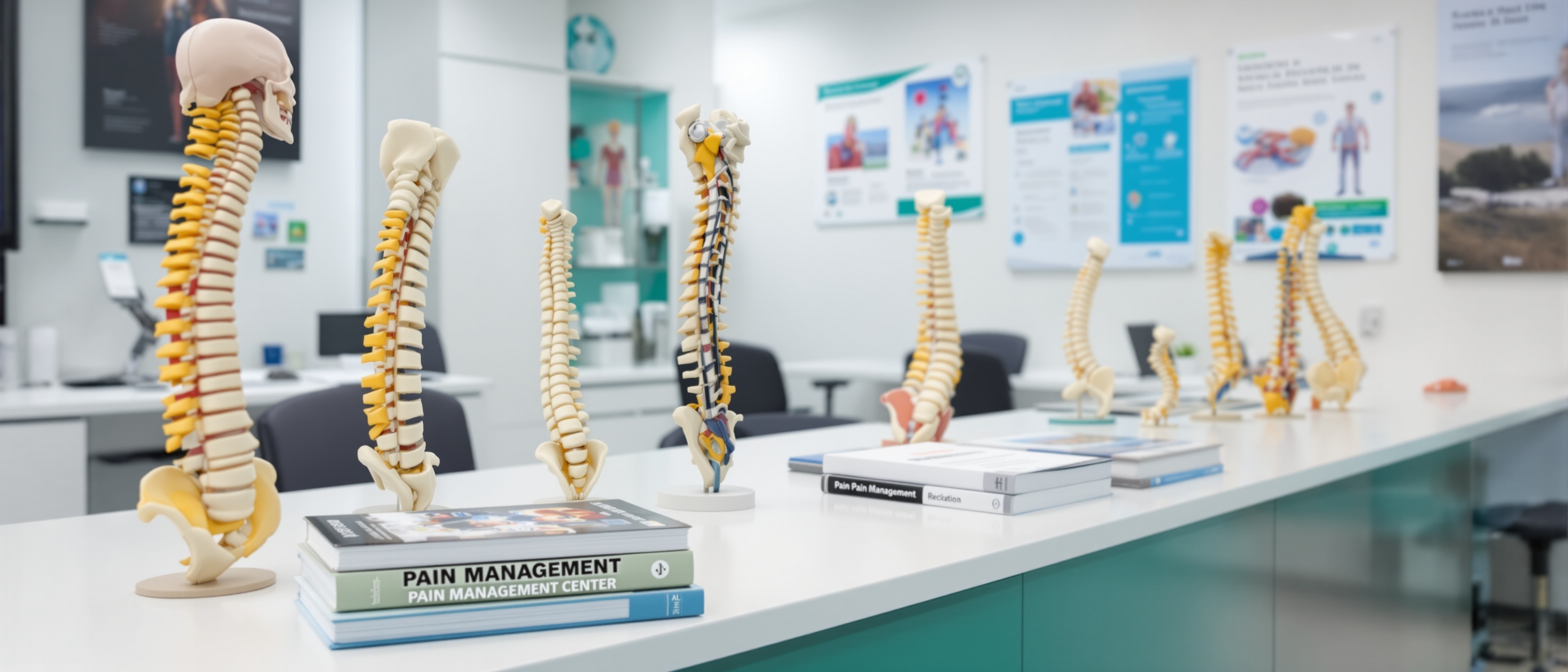
Patient Education
Understand the advanced, minimally invasive interventional procedures we offer to diagnose and treat pain at its source
Understanding Your Interventional Pain Procedures
At NeuroTrauma Medical Group, we believe informed patients achieve better outcomes. This resource provides detailed information about each interventional procedure we offer, including how it works, what conditions it treats, and the benefits you can expect.
All procedures are performed by our board-certified specialists using fluoroscopic or ultrasound guidance for maximum precision, safety, and effectiveness.
11 Procedures
Covered in detail
5 Categories
Organized by area
Image-Guided
All procedures
Our Interventional Procedures
Click on any procedure below to learn more about how it works, what it treats, and its key benefits
Showing 11 procedures
Overview
A lumbar medial branch block is a diagnostic and therapeutic injection that targets the small medial branch nerves responsible for transmitting pain signals from the facet joints in the lower back at the L3, L4, and L5 levels.
How It Works
Using fluoroscopic (X-ray) guidance, a small amount of local anesthetic is precisely injected near the medial branch nerves that supply the facet joints. If the patient experiences significant pain relief, it confirms the facet joints as the source of pain and may qualify the patient for a longer-lasting radiofrequency ablation procedure.
Conditions Treated
- Chronic lower back pain
- Facet joint arthropathy
- Lumbar spondylosis
- Post-traumatic lumbar pain
Key Benefits
- Pinpoints the exact source of lower back pain
- Minimally invasive outpatient procedure
- Rapid pain relief within minutes
- Guides future treatment decisions
Overview
Lumbar radiofrequency ablation (RFA) is a minimally invasive procedure that uses heat generated by radio waves to disrupt the function of the medial branch nerves at the L3, L4, and L5 levels, providing long-lasting relief from chronic lower back pain originating in the facet joints.
How It Works
After a successful diagnostic medial branch block, a specialized radiofrequency needle is placed near the targeted medial branch nerves under fluoroscopic guidance. Controlled thermal energy is delivered to create a small lesion on the nerve, interrupting its ability to transmit pain signals. The procedure typically provides relief lasting 6 to 12 months or longer.
Conditions Treated
- Confirmed facet joint pain (positive medial branch block)
- Chronic lumbar facet arthropathy
- Degenerative disc disease with facet involvement
- Failed conservative therapy for lower back pain
Key Benefits
- Long-lasting pain relief (6–12+ months)
- Reduces need for oral pain medications
- Minimally invasive with quick recovery
- Can be repeated if pain returns
Overview
A cervical medial branch block targets the small nerves that carry pain signals from the facet joints in the upper neck at the C3, C4, and C5 levels. This procedure is both diagnostic and therapeutic, helping identify the source of chronic neck pain.
How It Works
Under fluoroscopic guidance, a thin needle is carefully positioned near the medial branch nerves in the cervical spine. A small volume of local anesthetic is injected to temporarily block pain transmission. Significant pain relief confirms the cervical facet joints as the pain generator and may indicate candidacy for radiofrequency ablation.
Conditions Treated
- Chronic neck pain
- Cervical facet joint syndrome
- Whiplash-associated neck pain
- Cervical spondylosis
Key Benefits
- Accurately diagnoses cervical facet pain
- Quick outpatient procedure
- Minimal downtime
- Helps plan long-term treatment strategy
Overview
Cervical radiofrequency ablation uses targeted thermal energy to disrupt the medial branch nerves at the C3, C4, and C5 levels, providing extended relief from chronic neck pain caused by cervical facet joint dysfunction.
How It Works
Following a positive diagnostic cervical medial branch block, a radiofrequency cannula is precisely placed adjacent to the targeted nerves using fluoroscopy. Controlled heat is applied to create a thermal lesion, effectively interrupting the nerve's ability to send pain signals to the brain. Patients typically experience relief lasting 6 to 12 months or more.
Conditions Treated
- Confirmed cervical facet pain (positive medial branch block)
- Chronic cervical facet arthropathy
- Post-whiplash chronic neck pain
- Cervicogenic headaches from facet involvement
Key Benefits
- Sustained pain relief for 6–12+ months
- Significant improvement in neck mobility
- Reduces reliance on pain medications
- Repeatable procedure with consistent results
Overview
Platelet-Rich Plasma (PRP) therapy for myofascial pain involves injecting a concentrated preparation of the patient's own platelets into affected muscles and soft tissues in the cervical, thoracic, and lumbar regions to promote healing and reduce chronic myofascial pain.
How It Works
A small sample of the patient's blood is drawn and processed in a centrifuge to concentrate the platelets and growth factors. This PRP solution is then injected directly into the myofascial trigger points and affected soft tissue areas under ultrasound guidance. The concentrated growth factors stimulate tissue repair, reduce inflammation, and promote natural healing of damaged muscle and fascia.
Conditions Treated
- Myofascial pain syndrome
- Chronic muscle tightness and trigger points
- Soft tissue injuries from trauma
- Persistent neck, mid-back, and lower back muscle pain
Key Benefits
- Uses the body's own healing factors
- Addresses the root cause of myofascial pain
- Minimal risk of allergic reaction
- Promotes long-term tissue repair and recovery
Overview
A sacroiliac (SI) joint injection delivers anti-inflammatory medication and local anesthetic directly into the sacroiliac joint — the joint connecting the lower spine to the pelvis. This procedure serves both diagnostic and therapeutic purposes for lower back and buttock pain.
How It Works
Using fluoroscopic guidance, a needle is carefully advanced into the sacroiliac joint space. A combination of local anesthetic and corticosteroid is injected to reduce inflammation and pain within the joint. If the patient experiences significant relief, it confirms the SI joint as the pain source. The anti-inflammatory effects can provide weeks to months of sustained relief.
Conditions Treated
- Sacroiliac joint dysfunction
- SI joint inflammation (sacroiliitis)
- Lower back and buttock pain
- Pain radiating to the hip or upper thigh
Key Benefits
- Confirms SI joint as the pain source
- Reduces joint inflammation effectively
- Provides weeks to months of relief
- Minimally invasive with rapid recovery
Overview
A genicular nerve block targets the sensory nerves (genicular nerves) that transmit pain signals from the knee joint. This diagnostic and therapeutic procedure helps identify and manage chronic knee pain without surgery.
How It Works
Under fluoroscopic or ultrasound guidance, local anesthetic is injected near the genicular nerves — typically the superior medial, superior lateral, and inferior medial genicular nerves around the knee. Temporary pain relief confirms these nerves as the pain pathway and may qualify the patient for a longer-lasting radiofrequency ablation of the genicular nerves.
Conditions Treated
- Chronic knee pain
- Knee osteoarthritis
- Post-surgical knee pain
- Knee pain unresponsive to conservative treatment
Key Benefits
- Non-surgical approach to knee pain
- Identifies the specific pain pathway
- Quick procedure with minimal downtime
- Guides candidacy for genicular RFA
Overview
Genicular radiofrequency ablation uses thermal energy to disrupt the genicular nerves around the knee, providing long-lasting relief from chronic knee pain. This is performed after a successful diagnostic genicular nerve block.
How It Works
Following a positive genicular nerve block, radiofrequency cannulas are positioned near the targeted genicular nerves under fluoroscopic guidance. Controlled heat is applied to create thermal lesions on the nerves, interrupting their ability to transmit pain signals from the knee joint. Patients typically experience significant pain relief lasting 6 to 12 months or longer.
Conditions Treated
- Confirmed genicular nerve-mediated knee pain
- Moderate to severe knee osteoarthritis
- Chronic knee pain in patients not candidates for surgery
- Persistent knee pain after joint replacement
Key Benefits
- Long-lasting knee pain relief (6–12+ months)
- Avoids or delays knee surgery
- Improves mobility and quality of life
- Minimally invasive outpatient procedure
Overview
An occipital nerve block involves injecting local anesthetic and anti-inflammatory medication around the greater and lesser occipital nerves at the base of the skull. This procedure treats headaches and pain originating from the back of the head and upper neck.
How It Works
The occipital nerves are located at the back of the head near the base of the skull. Using anatomical landmarks and palpation, a small amount of local anesthetic — often combined with a corticosteroid — is injected around these nerves. The injection blocks pain signal transmission, providing relief from occipital neuralgia, cervicogenic headaches, and certain types of migraines.
Conditions Treated
- Occipital neuralgia
- Cervicogenic headaches
- Chronic migraines with occipital involvement
- Post-traumatic headaches
Key Benefits
- Rapid headache and neck pain relief
- Simple, well-tolerated procedure
- Can be performed in-office
- Helps differentiate headache types for treatment planning
Overview
A supraorbital nerve block targets the supraorbital nerve, which provides sensation to the forehead and upper eyelid area. This procedure is used to diagnose and treat frontal headaches and forehead pain.
How It Works
The supraorbital nerve exits through the supraorbital foramen (or notch) above the eye. Using precise anatomical landmarks, a small volume of local anesthetic is injected near the nerve. This blocks pain signals from the forehead region, providing diagnostic information and therapeutic relief for various types of frontal headaches and facial pain conditions.
Conditions Treated
- Frontal headaches
- Supraorbital neuralgia
- Post-traumatic forehead pain
- Migraine with frontal predominance
Key Benefits
- Targets forehead and frontal pain specifically
- Quick in-office procedure
- Minimal discomfort during injection
- Helps diagnose the source of frontal headaches
Overview
An auriculotemporal nerve block targets the auriculotemporal nerve, a branch of the mandibular division of the trigeminal nerve. This nerve provides sensation to the temple, ear, and temporomandibular joint (TMJ) region, making this block valuable for treating temporal headaches and TMJ-related pain.
How It Works
The auriculotemporal nerve runs in front of the ear near the superficial temporal artery. Using anatomical landmarks, a small amount of local anesthetic is injected near the nerve in the preauricular region. This blocks pain transmission from the temple, ear, and jaw area, providing both diagnostic confirmation and therapeutic relief for temporal and TMJ-related pain conditions.
Conditions Treated
- Temporal headaches
- TMJ-related pain
- Auriculotemporal neuralgia
- Post-traumatic temporal pain
Key Benefits
- Addresses temple and jaw-area pain
- Helps diagnose TMJ vs. neurologic pain
- Minimally invasive with rapid onset
- Can be combined with other nerve blocks for comprehensive relief
All Procedures Performed Under Image Guidance
Our board-certified specialists use fluoroscopic or ultrasound guidance for all interventional procedures, ensuring precision, safety, and optimal outcomes for every patient.
Have Questions About a Procedure?
Our board-certified specialists are here to answer your questions and help determine the best treatment plan for your condition